What is Hermeneutics?
A primary reason for so many false teachings, heresies, blasphemies, misunderstandings, misreadings, mishandling, misinterpretations of God’s Word, and unbiblical ecclesiology is either a lack of hermeneutics or bad hermeneutics. And so that leads me to another question and definition: What is Hermeneutics?
There are many more technical definitions and various methods of hermeneutics. But for this blog post, I’m going to keep it as short as possible.
The word hermeneutics is derived from the Greek word hermēneuō. It is a verb that means ‘to interpret.’ That’s to the point, right? But here’s a little more.
In summary, hermeneutics is a discipline, science, theory, method, and practice of interpretation. To accurately interpret words and their actual meaning. And it is done so while understanding and applying the proper context, history, and grammar.
Context. What is the context of the word, verse, passage, chapter, and even the book?
Historicity. What is the history? Who wrote it? Who was it written to? What is the purpose of the Text?
Grammatically. Before today’s English translation, what did the Text mean in the Hebrew, Greek, and/or Aramaic? What is the actual syntax of the Text?
In Reformed Theology, we know regeneration proceeds faith. I submit to you that a proper hermeneutics precedes a proper exegesis.
Christians should not read the Bible as if it were a book. We must know the Scriptures are the Living Words of Almighty God, and we do so with trembling hands (Nehemiah 8:7-8, Luke 24:27-32, Acts 8:30-35, 2 Timothy 2:15, etcetera).
OK, I have nominally defined the word hermeneutics, so you could stop right here. Or, if you choose to dive deeper, for a more technical definition of hermeneutics, then go with me further.
From the Concise Dictionary of Theological Terms
Hermeneutics—the art and science of biblical interpretation. Biblical interpretation encompasses both general and special hermeneutics. General hermeneutics pertains to the interpretation of any literature. It deals with grammar and syntax, historical background, context, speech figures, and genre. Special hermeneutics pertains to the interpretation of Scripture. To matters of general hermeneutics, it adds redemptive history, prophecy and fulfillments, type and antitype, and relation to Christ. Recent studies in hermeneutics have drawn attention to the relationships between author, text, and original and later readers. Hermeneutics differs from exegesis, which is applying hermeneutics to the actual interpretation of biblical texts. See also exegesis; systematic theology.
Christopher W. Morgan and Robert A. Peterson, “Hermeneutics,” in A Concise Dictionary of Theological Terms (Nashville, TN: B&H Academic, 2020), 77.
From the New Dictionary of Theology
Hermeneutics may be defined briefly as the theory of interpretation. Traditionally and until very recently it has been taken to mean the study of rules or principles for the interpretation of particular texts. But this definition is too narrow. First, hermeneutics concerns not only the interpretation of texts, but the interpretation and understanding of any act of communication, whether written or oral, verbal or non-verbal (such as symbols or symbolic acts). Biblical hermeneutics is a specific area which concerns the interpretation, understanding, and appropriation of biblical texts. Second, theorists are no longer content to speak of rules for the interpretation of texts, as if to imply that understanding can be generated merely by the mechanical application of purely scientific principles. Hermeneutics raises prior and more fundamental questions about the very nature of language, meaning, communication and understanding.
The subject thus involves an examination of the whole interpretative process. This raises issues in the philosophy of language, theories of meaning, literary theory, and semiotics (theory of signs), as well as, in biblical hermeneutics, those which also arise in biblical studies and in Christian theology. The subject is no longer seen as a supplementary tool for ensuring ‘correct’ interpretation, but as a profound reflection on the very basis and purpose of interpretation and of how we decide what would count in the first place as a ‘correct’ interpretation. Indeed, whether we should speak of an interpretation as ‘correct’, ‘productive’, ‘valid’ or ‘responsible’ remains still a hermeneutical question. The first step is to enquire into the conditions under which any kind of interpretation is possible or appropriate to certain given purposes of reading, writing or understanding.
Sinclair B. Ferguson and J.I. Packer, New Dictionary of Theology (Downers Grove, IL: InterVarsity Press, 2000), 293.
Similar to discernment. The knowledge of proper hermeneutics means nothing if we do not have the courage from the Lord to put our knowledge into practice. As the hashtag says, Hermeneutics Matter.
This post is part of a What Is series I’m working on.
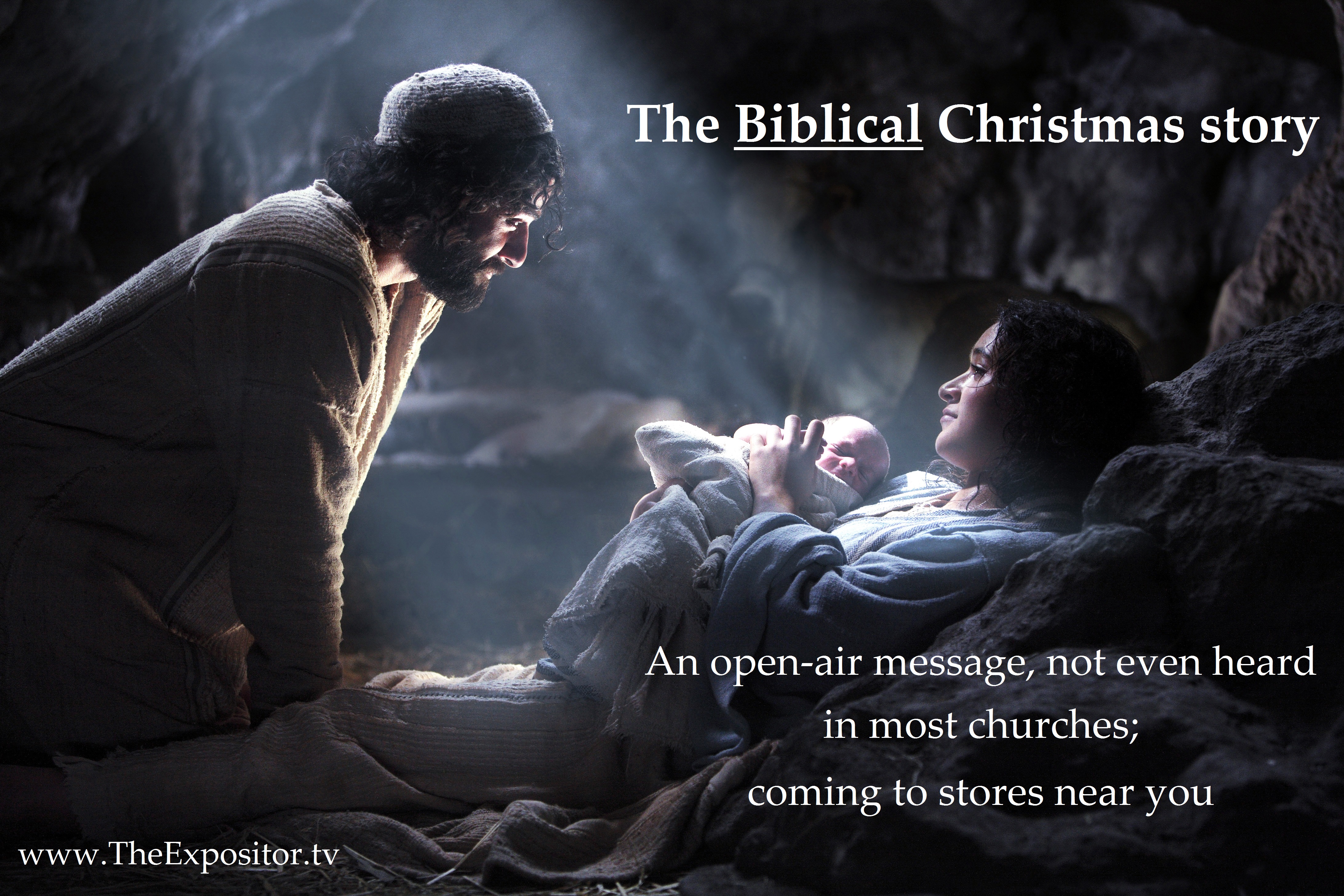
The death of baby Jesus in 1 Peter 3:18 (an unpopular Christmas story)

Preaching ‘I’m a bride but without a dress, God loves His church but not…’

My video ‘Satan silences and deceives many regarding homosexuality, as well as heterosexual sins’ & the false claim that ‘all sins are equal’
About The Author

Bill Rhetts
An ordinary sinner saved by an Extraordinary Savior. Radically saved, and radically changed, by a Radical God. For more details, see the above 'About me' tab.