What is a church sanctuary?
Disclaimer: Though architecture can be important, I am not speaking in the context of a building’s architecture. Nonetheless, I am speaking of how the congregation meets.
Let me first say what a sanctuary is not.
The sanctuary of a church is not a country club, a social club, a recreational room, a community center, a place for entertainment, a place to have fun, a place for immodesty, or a place for patriotic pride. It is not a coffee shop or restaurant.
Whatever unbiblical practices the church disallows in the sanctuary should not be allowed in other ministries throughout the building where the church gathers. That includes egalitarianism. Lest our ecclesiology have a split personality disorder.
The sanctuary should be a holy, consecrated place of reverence. A sanctified place of refuge and protection from the world, a special place set aside for vertical worship.
A place where His saints congregate to worship the Holy of Holies. It is a tabernacle and a place of His unique sacred Presence.
A place where the elect is hallowed by His Divine Presence on the Lord’s Sabbath Day.
It is a place where His people are to give their undivided, non-distracted attention to God and the demonstration of His means of grace.
And what about the preaching of God’s Word?
Though I’ve fallen short. Preaching God’s Word must be done with utmost reverence and humility. It should be taught expositionally, with a sense of fear. The preacher must handle the Scriptures with trembling hands. The Word will pierce hearts, leading to conviction, conversion, and humility, while also driving away those who stand against the faith.
“Hear the word of the Lord, ye that tremble at his word; Your brethren that hated you, that cast you out for my name’s sake, said, Let the Lord be glorified: but he shall appear to your joy, and they shall be ashamed.” – Isaiah 66:5
At our church, we strive for a healthy sanctuary environment. With the blessing of my fellow Elder and the permission of another Reformed Baptist pastor, I borrowed this from their bulletin and pasted it into ours (though I made a few changes).
‘Please remember the time just before our Worship Service is for silent meditation in preparation for worshiping our Almighty God. When entering the sanctuary, please be aware and courteous to those who are preparing for worship, and come early enough to help foster this environment.’
My definition of sanctuary is not legalism; it is a manifestation of His Holiness and the sanctification that He has bestowed upon His church.
A way to foster this type of sanctuary environment is by demonstrating orthodoxy (right thinking, right doctrine, or straight belief) and orthopraxy (right practice), as well as practicing a Regulative Principle of Worship. More below.
A Position Paper Concerning the Regulative Principle of Worship
https://www.theexpositor.tv/wp-content/uploads/A-Position-Paper-on-a-RPW.pdf
Update 11/09/25: The video version is now available here or below.
This post is part of a What Is series I’m working on.
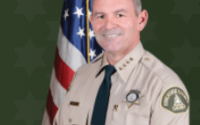
Sheriff Chad Bianco resists medical tyranny & vows to God & “We the People” to protect liberty & freedom – Podcast #59

Tennessee Governor Bill Lee’s fourth State of the State address to the General Assembly and fellow Tennesseans
Recording audio with remote wireless transmitter while evangelizing
About The Author

Bill Rhetts
An ordinary sinner saved by an Extraordinary Savior. Radically saved, and radically changed, by a Radical God. For more details, see the above 'About me' tab.
Add a Comment
You must be logged in to post a comment.
Many years ago, I attended a church that had this policy. Which was written in the bulletin and enforced. If anyone left the sanctuary during the preaching, when they attempted to re-enter, the usher(s) (or security) would have them re-seated in the foyer. And if people came to church late, they were asked to sit in the foyer and join the others. If they were serious about their attendance, they would quietly listen via the speaker system in the foyer. The benefits of that policy were many. Including but not limited to. 1) That eliminated a breach in security, enabling security (or ushers) to close and secure the doors to the sanctuary. Making it more possible for security to identify an active shooter and eliminate the threat before they attempt to enter the sanctuary. 2) Most importantly, it fostered a sanctuary environment that was respectful or reverential toward our Lord. Reference to God’s Word and the Theos of His Word deserves our undivided, non-distracted attention. Though today’s evangelicalism will wrongfully call this “legalism,” I support this.
Below is an accurate definition of what legalism is and is not.
.
“Legalism is not a strict and conscientious life of obedience to the commands of Scripture. Legalism is not pressing Biblical duty upon a person. To expound the Word of God and then apply that word to the hearts and consciences of the people of God is not browbeating and it is not legalism.
.
Legalism, basically speaking, has three prongs to it. First, it is the mentality of a works righteousness – that is, the idea of my good works earn my salvation or secure my salvation before God. Second, and this is closely related, it is enforcing into practice regulations which God has fulfilled in Christ. This was part and parcel of the Galatian heresy – dietary laws, circumcision, feast days, and sacrifices were added to the work of Christ to ensure that one was truly saved. Third, legalism is when those in authority preach their own traditions in place of the Word of God. In Matthew 15:9, Jesus calls this, “teaching as doctrines the commandments of men.”
.
Source: A New Exposition of the London Baptist Confession of Faith of 1689 (Ventura) Page 386
With all the “Happy Birthday” signing in sanctuaries in West Tennessee, I say this.
.
There are many appropriate places to celebrate and sing “Happy Birthday,” but the Lord’s sanctuary on the Lord’s Day is not one of them. It is inappropriate to draw attention to ourselves. Our undivided nondistracted attention should be vertical worship to our Lord, not horizontal. A solution to this man-pleasing problem is repentance and practice the regulative principle of worship, not normative. Let’s make a #RegulativePrincipleOfWorship great again! https://www.theexpositor.tv/blog/what-is-a-church-sanctuary/
Tardy people won’t like this. But a motivation killer for me on the Lord’s Day in the Lord’s sanctuary was tardy people. Especially repeat offenders. Side note: Though extracurricular church activities are more relaxed than the Lord’s Day sanctuary. When I used to engage in formalized discipleship (under a local church discipleship class), I had three requirements. 1) Please, don’t be late. 2) BYOB (Bring your own Bible). And 3) Leave your cellphone in your car. I was glad to reciprocate. I remember one time leaving a restaurant, waiting for a man who was a new believer. The meeting was for a “discipleship class” held through the church. 30 minutes later, he was a no-show, so I left. I later discovered he left a voicemail letting me know he’d be late. I reminded him that part of our training was to leave our cellphones in our car. Though tardy people will call that legalism, those who agreed to that standard were usually more serious about Biblical discipleship. I’m thankful for my Daddy, who, way before salvation, taught me not to be late. I am thankful for secular employers who hold the same standard.
https://www.gotquestions.org/late-lateness.html
#Tardy #TardyPeople #BeingTardy #BeingLate #Discipleship